


Shipper | Case study
How a distributor used supply chain modeling to maintain service during a warehouse closure
Supply chain modeling provides 55% cost avoidance for hydroponics distributor.
From governmental regulations and port strikes to extreme weather and other unforeseen events, supply chain disruptions can require shippers to make complex decisions quickly. An up-to-date network optimization model can support both strategic planning and tactical decision-making, helping companies respond to disruption while identifying opportunities to avoid unnecessary costs. A hydroponic equipment distributor’s experience shows the value of having that foundation in place before disruption occurs.
Key takeaways
- Schneider used an existing supply chain network model to help a hydroponics distributor respond to an unexpected warehouse closure.
- The team developed an initial warehouse reassignment scenario within one hour and a more comprehensive, optimized solution within three hours.
- By balancing warehouse capacity, distance and transportation costs, the optimized model reduced the outbound cost increase by 55% without extending transit times.
- The model supported warehouse labor planning and helped secure additional carrier capacity to keep shipments moving.
Background: A warehouse closure threatened a distributor’s supply chain
The largest distributor of hydroponic equipment in the U.S. commissioned Schneider to conduct a strategic supply chain analysis to recommend the best warehouse footprint to support their growth.
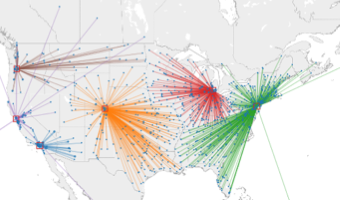
These types of strategic engineering studies are multi-phase. As an early part of the studies’ normal progression, Schneider created a network optimization model and ran baseline scenarios. The map below shows the distributor’s baseline customer assignments as bursts for each of their six existing warehouse regions.
Situation: Using network optimization to minimize disruption during a facility shutdown
When a significant disruption hit the hydroponic equipment distributor’s mountain-region facility, it had to shut down immediately for two weeks. This shutdown could have created huge service issues for the distributor. Because quality service is an important element of the distributor’s business model, priority was placed on ensuring product could still ship.
That meant the distributor needed a solution quickly. The existing network optimization model and baseline scenarios made a more detailed analysis possible, which would prove valuable in the near future.
Solution: How Schneider used network optimization to balance warehouse capacity, transit times and cost
Using the information from the baseline network model, the Schneider engineering team got to work quickly. The distributor requested the logical solution from Schneider: to reassign each end customer to a new warehouse based on distance.
Schneider delivered this “next closest” solution within one hour of the request. But the logical solution wasn’t ideal. While less than 8% of the volume had a negative service impact (measured when a customer moved from one to two days of transit time), the additional cost of the solution was significant. Because the distributor was experiencing significant growth, capacity was an issue that these new assignments would further magnify, leading to service and delivery issues. The Schneider engineering team delivered the original request but knew capacity needed to be considered in the solution to best serve the distributor and its customers, so they kept working.
Fortunately, network optimization models excel at considering more than one factor in a decision: how do we blend a solution that considers the “next closest” location with the need for reliable capacity, and what is it going to cost? Because the data was current, within three hours the Schneider team could model and deliver a second scenario that took capacity and distance into consideration. The new optimal solution included facility capacity constraints, as well as inbound, outbound, transfer and handling costs. This solution reduced the outbound cost increase by 55% while also removing capacity issues. There would be no additional increase in transit time, which meant service would be acceptable by the distributor’s customers.
Schneider then used the model outputs to predict volume by facility, which allowed for better staff and labor planning for the open warehouses. To top it off, Schneider found additional carrier capacity to cover the new shipping lanes, ensuring everything shipped on time to operationalize the results from the network optimization model.
Supply chain network modeling helps businesses respond to disruptions
Compare these models side by side.
Baseline: The yellow burst representing mountain facility is visible. It is missing in the second two maps because the facility shut down.
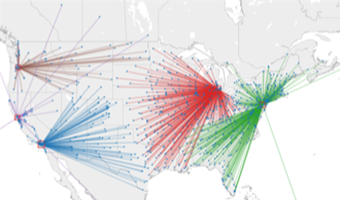
Next closest model: This solution was logical, but it left lots of gaps and was expensive.
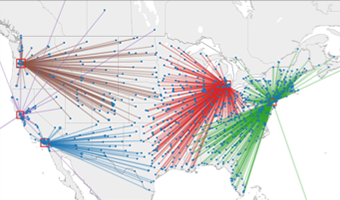
Optimized Supply Chain Model: This solution mitigates costs while honoring capacity and product constraints of each remaining facility.
Results: 55% lower outbound cost increase without longer transit times
Schneider reduced the cost increase by 55% through network modeling (covering nearly half the distributor’s investment in the initial engineering work).
- Efficient Service: Thanks to the up-to-date network model, Schneider delivered a mitigation solution in fewer than three hours from the initial request, and the distributor shifted workflows quickly.
- Strategic Planning: The new throughput calculation enabled better resource planning for each warehouse.
- Network Advantage: Schneider leveraged its wide carrier base to cover expanded territories.
- Expert Solutions:A team of experienced supply chain operators at Schneider provided guidance during crisis management.
Why maintaining an up-to-date supply chain network model matters
By proactively working with Schneider supply chain engineers, the distributor set itself up for success, weathering disruptions in its supply chain, avoiding costs and seeing a near-immediate return on investment (ROI).
Drive your business forward
Sign up to receive our industry leading newsletter with case studies and insights you can put to use for your business.


